As part of our celebration of Pride Month, we’ve invited eight adult authors for this collaborative guest post. The prompt is to discuss their journey to publishing (whether it’s traditional or indie), debut novels, writing insights, evolution of the LGBTQ+ genre, and writing goals. They were also welcome to share something personal such as their first kiss, coming out, and more. It depends on their threshold of comfortability on which topic they’d like to share with our readers.
The aim of this post is to show our young readers, aspiring authors or not, that there are successful authors like them that are shifting the narrative of the publishing and book community.

Charlotte Hamilton, author of Lambs Can Always Become Lions
Coming to terms with my sexuality was such a long process. I still don’t think I’m 100% there yet. Especially with the demisexual part of it. I sometimes see things and think I’m not “queer” enough to speak up or speak out. Thankfully, I have such wonderful friends who have been through the same thing, who support me no matter what.
My writing also helps. Focusing on writing characters who are also bisexual/demisexual has helped me lose the shame I felt. It helped me accept myself more and helped me connect with my fellow queer writers and readers. It is always my dream be like Malinda Lo – writing about queer girls in a fantasy setting and having my fellow queer girls know that when they pick up my books, they’ll see themselves.
I’ve already started this with my first published work ever! It is a f/f Robin Hood retelling called LAMBS CAN ALWAYS BECOME LIONS. Granted it’s only a short novella but writing it, knowing people would read it, just opened up a part of my heart I hadn’t realised had been shut. I hope when people read it, it does something similar to them.
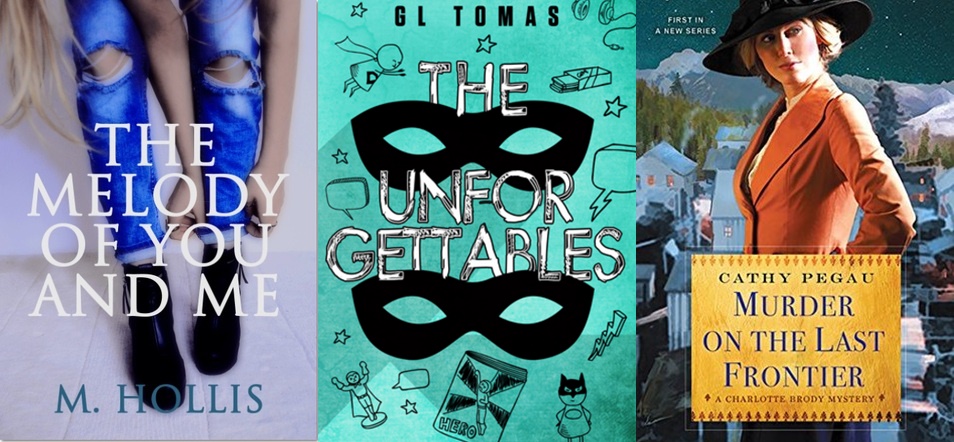
 Maria Hollis, author of The Melody of You and Me
I didn’t grow up with access to LGBT+ books. These subjects were just not part of my reality unless people were whispering about a friend of a friend who had married another man. My childhood and teenage years were permeated by a feeling of confusion and loneliness that never left me when I was around most of my friends. It took me until the beginning of my adult life to start learning about myself. Years of dealing with self-loathing and that uncomfortable feeling always stayed with me, like my body knew something my brain still didn’t know.
I remember when I started reading more diverse books and when I finally opened the pages of Far From You by Tess Sharpe and my heart started beating faster. There wasn’t only a girl falling for another girl but the story also alluded to sex. I was surprised that people could do this in books! It sounds silly to tell now, but I had this wonderful feeling inside of me about finding stories about us. And from there, I couldn’t stop anymore. The more I read these stories, the more I want to find different authors and different tropes and different approaches to living as a person who’s part of the LGBT+ community, mainly about other women like me.
But I was still extremely privileged because the only way I could read these stories was because I had the time to learn English. What about all the other Brazilian people who can’t or don’t want to read in this language? Don’t we all deserve to see ourselves, inside our reality? This is what I think about now all the time. I think about the many young people all around the world who deserve to see themselves in the pages of a book. I recently found two Brazilian writers who self-published their short stories, Olivia Pilar and Solaine Chioro. It made me incredibly happy to see their stories up on Amazon, to think there are people who want to change this and make stories available for the readers who need it. We’re still such a long way to making publishing more inclusive, but we have to start somewhere. And it has to start with us.
 Brigitte Bautista, author of Don’t Tell My Mother
I spent my formative years in a Catholic school for girls. While I owe my closest friends and a collection of embarrassing life anecdotes from my time there, it also affected how I came to accept myself and my lady-loving ways. I was conditioned to think of homosexuality as a phase; that my attraction towards other girls was because I spent most of my days around them, that I’d grow out of it once I go out into the ‘real world’. In college, I tried to validate this it’s-a-phase theory. I tried to fit into other people’s expectations of how a young woman should look, act, think and feel. This went on until it hit me in the noggin that it wasn’t just a phase. It was who I am, and I had to be OK with it.
I’ve been meaning to write about my high school experience. But, I didn’t want to poke fun at it for the sake of poking fun. A free workshop by a local publisher, mentored by Mina V. Esguerra, afforded me the opportunity to explore this further. With “Don’t Tell My Mother”, I had the chance to tackle the interplay of religion, sexuality and identity. Religion is such a touchy subject, but I wanted to somehow keep the narrative light and funny and not dripping with drama. There was a brief moment where I considered not pursuing it. There was a publishing deal at stake, and I found myself asking if it was too much, too different, too out there for a first try. But, then, if I didn’t write it, what was I telling myself? That who I am is too much, too different, too out there to be a novel? So, I said, fuck it, I’m going to write this story, whether it gets published or not.
Now that I’ve come to discover this whole world of f/f literature – special thanks to Twitter, #romanceclass and the authors and readers I get to talk to about stuff, I am inspired to contribute to that space and support narratives that give respectful, thoughtful and accurate queer representation. There are still so many stories to tell, and so many amazing-as-all-hell authors! As an author and reader, I am beyond excited about what the future holds.

Chelsea M. Cameron, author of Second Kiss
Sometimes I think back to 2009. I’d just graduated college with a degree in journalism and a minor in English and a determination to become a novelist. Only problem was that I needed a job, FAST. So I moved back to my hometown and got a job at the local bank and wrote at night when I got home from work. It was grueling and I was deep in researching how to get published. At the time, most people followed the query, agent, submission, publisher, deal formula. I did TONS of research (sometimes during off times at my day job OOPS) and started working on a query letter.
Then, one day, Amazon recommended a book to me written by someone called Amanda Hocking. I’d never heard of her and I set out to do some research. I found her blog and thus found “independently publishing” was a thing. A BIG thing. A thing I could totally do. I thought that hey, if I could get my work out there then maybe somewhere an agent would read it and I could get one that way. Or maybe I could supplement my income and pay off some of my student loans. It seemed like a total win.
I got to work on my young adult paranormal romance. I edited it myself (which I DO NOT RECOMMEND. DO NOT DO THIS), made the cover in GIMP (because I couldn’t afford Photoshop), learned how to format (again, no money) and put my book up in February of 2012. I think I sold like 15 copies at 99 cents in May, which I thought was pretty cool. I added a few more books and then, in June of that year, I had an idea for a contemporary romance. A college romance, which was just starting to be a thing called New Adult. I published it in September of 2012. Within a week of publishing it, I’d gotten contacted by an agent, made the NY Times and USA Today list and completely changed my life.
Fast forward a few years, a few more books, me realizing my sexuality is NOT heterosexual, a few mistakes, some queer books, losing an agent and here I am, querying again. It’s almost like being back to the beginning. Fortunately, I know a LOT more about the industry. I have contacts. I have friends. I actually talk to these agents on twitter frequently. And I’m writing the books of my heart. Currently, that’s a contemporary retelling of Jane Austen’s Pride and Prejudice about Georgiana Darcy falling in love with Mary Bennet. I completely love it and I hope I’m going to find a home for it soon.
Life goes in cycles. Things change. You can be at the top one day, and the bottom the next. The only thing I know is that I’m never giving up. I’ve got too much invested and I love this job. I wouldn’t want to do anything else, even though I complain about writing ALL THE TIME. I’m a writer, it’s what we do.
No writer’s journey is the same. Never listen to someone who says “it MUST be done THIS way,” because that’s a lie. There is no one right way to be an author. I’m proof of that. Pick your own path. Do what works for you.
When I look back, I don’t have many, if any, regrets. Things worked out the way they worked out. I’m just excited about this next chapter and so happy that I get to write what I want every day.
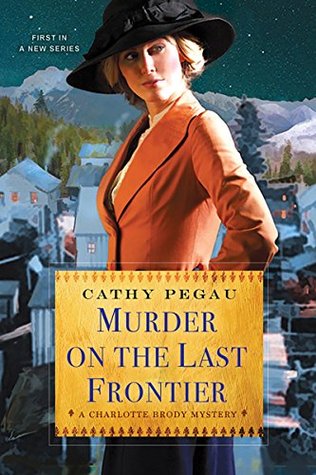 Cathy Pegau, author of Murder on Location
Writing my first lesbian/bi woman book at forty-something was cathartic. From the time I was a teenager, and all through college, I’d found women as attractive as men, but never acted on it. Why? Upbringing, uncertainty, there were plenty of “reasons” to set those feelings aside. But they were always there. Even after marrying a great guy and having kids, the attraction to women never decreased. If anything, it grew stronger. Exploring the emotions and physical acts of a fictional female-female relationship allowed me to confront long-repressed feelings, to grapple with who I was, and how I’d see myself. I was bi, possibly pan, and that was okay. More than okay. It was who I was; it is who I am.
The acceptance and publication of Rulebreaker, then Deep Deception, was a huge event for me. It not only legitimized me as an author, but it helped solidify my sense of self. I could share my stories on professional and personal levels; people would see them—me—out in the world. It was one of the most thrilling and terrifying things I’d ever done. People would know, or at least suspect, who I was. But hopefully, more than anything, people would relate to my characters as much as I did.
When I’d first started submitting Rulebreaker in 2009, there weren’t many publishers taking F/F stories, at least none that I could find that weren’t looking for more erotic pieces (which mine aren’t). Now, I think authors have a greater opportunity to find publishers or to go independent. And though publishers aren’t quite keeping up with all the desires of LGBTQIAP audiences, I’d like to think the effort is being made. We have to keep submitting the stories we want to write and read, because seeing yourself on the page is a beautiful thing.

Michelle Osgood, author of The Better to Kiss You With
I come from a conservative, Albertan family. When I my first book, The Better to Kiss You With, was published, I wasn’t sure what reaction to expect – the best I hoped for was that everyone would sort of ignore it. Lesbian, werewolf romance isn’t exactly a genre my family seeks out. What I never expected has been the outpouring of support I’ve received – even from my most conservative family members. My grandfather read my book, explicit lesbian sex scenes and all, and told me I had made him proud! All my aunts have read The Better to Kiss You With, and now my second book Huntsmen. A couple even re-read my first book to make sure they were ready for the second!
It can be scary entering the public sphere as an LGBTQ author who writes LGBTQ characters. You are “out” to strangers almost instantly, and it’s often one of the only things people will know about you. I worried that being so publicly queer would alienate me from my family, especially my extended family members, but if anything it has been the opposite. My family is proud of what I do, and proud of who I am – something I’m not sure I would have realized, or they would have had a chance to demonstrate, if it weren’t for the super queer books I publish.
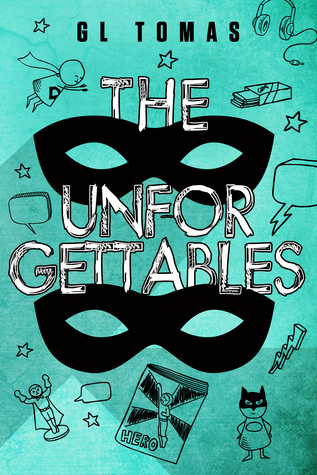 G.L. Tomas, authors of The Unforgettables
I don’t need to tell anyone that the road to publishing isn’t an easy path, traditional or indie. But what I can say is that the freedom and opportunities for queer writers are there, but we now have the chance to do it on our own in the ways that we want, and should you choose to take that route, only you can stand in your own way.
I think our G.L. Tomas penname highlights queer PoC’s, but it’s taken a while to realize we want to create a pen name specifically for main characters who identify as queer where a large part of their identity revolves around their pride and identity. Interestingly enough, half the books we’ve published so far feature queer main characters(and obviously more to come…) but even with those, we realize with our backlist being so diverse genre-wise, we want a pen name more specific to non-cishet stories. Books that are queer and colorful and without the lily-white queer experiences we’ve come to read and like but don’t necessarily reflect our particular identity. We just want more for everyone!
It’s just awesome how the state of queer romance is evolving (give us more asexual, trans and demi rep please!) and hope to contribute to it more with a pen name that specifically caters to PoC narratives. Even as proper adults, my sister and I have always struggled with our sexual identity and out of fear, it limited what we wrote. We’re excited to announce that in the very near future we’ve built up the courage to share more amazing stories with sexy, brave queer af heroines because we know if just one person wanted to read them, then it would’ve been all that we hoped for!

Taylor Brooke, author of Fortitude Smashed
It takes a lot of courage to say I’m going to be an author, because in the world of writing, nothing is entirely certain. I struggled with this uncertainty when I first started out. Picture this: Little me, 18, fresh out of high school, saying I’m going to be an author taking a class called Novel Writing during my first semester. The people in that classroom ate me alive, they demanded things of me I couldn’t give, wanted work I wasn’t ready to provide, and looking back on it, I realize I hadn’t lived enough life to give myself over to writing. This isn’t the case for everyone, but I’m going to be an author takes courage, and I had a lot of growing up to do before I could really call myself brave. I did something different for a long time; I wrote fanfiction and read books from my favorite authors and told myself that one day I would try again. One day happened when I was 22 and I wrote Omen Operation, which was acquired by a micro-press along with two sequential installments. I was over the moon, because I’m going to be an author had suddenly turned into I’m an author.
The Isolation Series was my baby, my first baby, and I’m a firm believer that your first is rarely your best. After I wrote it, I took time to hone my voice, better my writing and focus my intent. For some reason 18-year-old me thought 25-year-old-me would have the key to knowing: How Queer can this be? How do I stay relevant in the market while representing my community? Will I grow from here? I didn’t have the answers and I still don’t, because the secret, really, is that no one knows exactly what they’re doing. Usually, they’re just doing the best they can, and that’s what I did and it’s what I’m still doing. I do know that I haven’t written anything that doesn’t feature a Queer cast – I’ve written 6 books. I know that I hybrid-published The Isolation Series before Interlude Press acquired the rights to my New Adult contemporary romance, Fortitude Smashed, and that after a successful pitch in #DVpit, I’m now represented by an amazing agent. I know that I have grown and I’ll continue growing, it just takes time and grit and perseverance. I know that these last few years have been filled with letdowns and surprises and excitement, and I know that my courage to write what I wanted, how I wanted, is what’s kept me going.
It’s surprising for me now, because even after I’m going to be an author became I’m an author, sometimes I have to remind myself it’s true. I write books for a living – Queer, magical, heartfelt books – and it’s only because I didn’t give up that I have the privilege to do so. I started small and allowed myself to be brave. I didn’t let the folder full of rejections in my e-mail get me down, I didn’t stop writing or going to seminars or pushing myself, I didn’t let mass media control the direction of my stories or the integrity of my voice. I know it’s scary, terrifying even, but everyone has a moment when they think they aren’t good enough – I did when I was 18 and again at 22 and even now, 6 books in, sometimes I feel like I should know something I don’t. I often find myself reminded that in this industry, making friends with the unknown is the best course of action. My advice to aspiring Queer authors: Be brave and resolute and fearless, and know that people are waiting for your words. Power through the what if’s. Thicken your skin and get tough. And most importantly, don’t give up.